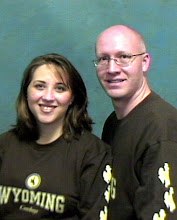
Sorry, we are not keeping up with this blog anymore. But you can continue to follow along with our beekeeping and other adventures as we are Chillin' Outdoors. Go ahead and subscribe to the channel so you don't miss out on anything! And feel free to share with your friends and families as well. Thanks, we do appreciate it!
Tuesday, May 9, 2023
Friday, April 11, 2014
Pussy Willow Bloom 2014
The pussy willow is in full bloom today, and the bees are all over it! This is always an exciting day for me. In my mind at least, this the beginning of bee season. This is the first bloom that is visible and allows the bees to bring in large amounts of pollen. It could very well be that the bees are able to get some nectar from the pussy willow as well, but I do not know for sure either way.
The main nectar flow that really allows the bees to pack away a lot of honey begins with the alfalfa bloom sometime in June. I have kept track over the years and have learned that the alfalfa bloom begins about 70 days after the pussy willow bloom. Since the pussy willow bloom is happening today, April 11th, I can plan on honey production moving into high gear on about June 20th. There will be smaller nectar flows between now and then- dandelions, fruit trees, etc. Let bee season begin!
Below are a series of pictures of the bees on the pussy willow today.


The main nectar flow that really allows the bees to pack away a lot of honey begins with the alfalfa bloom sometime in June. I have kept track over the years and have learned that the alfalfa bloom begins about 70 days after the pussy willow bloom. Since the pussy willow bloom is happening today, April 11th, I can plan on honey production moving into high gear on about June 20th. There will be smaller nectar flows between now and then- dandelions, fruit trees, etc. Let bee season begin!
Below are a series of pictures of the bees on the pussy willow today.
Finally, I took this little video of the bees in the pussy willow. Hopefully you will be able to see all the activity. At the end I held the camera up in the middle to try to pick up the hum of the bees, so turn your speakers up.
Monday, February 17, 2014
Winter Activities For Beekepers- Feeding The Bees
We finally had a nice day with a high in the upper 30's that coincided with one of my days off. It was a good day to take the bee candy I made a few weeks ago out to the hives
I have always fed the bees extra sugar cakes to make sure they can get through late winter and early spring without starving to death, but every year there is still honey left in the hives by the time the dandelions bloom. The bees do consume the sugar cakes at the same time they eat the remaining honey, so the question is- Would the bees survive just fine without the sugar cakes? The answer is- I don't know. But I would rather be safe than sorry.
Anyway, when I got out to the hives a pulled the tops off, this is what I found:
You can see the clusters in each of the two hives- it looks like both are coming through the winter in pretty good shape. I think Georgia might have a larger population than Ida but it is hard to tell as we can't really see how far down the cluster extends.
I put an empty super on top of each of the hives and laid the sugar cakes inside. Here is a picture of what that looked like before I put the top cover on.
I glanced down between the frames and it looks like all the frames in the upper deep hive body of each hive still have honey- that is a good sign that they will remain healthy through the spring. But I didn't pull any of the frames out since I didn't want to disturb the clusters too much while it is still cold outside, so I don't really know how far down the honey stores actually go.
I plan on splitting one of the hives to repopulate a third hive that is currently vacant later this spring- probably toward the end of April. I don't know which hive will get split- we will just have to wait and see which population is booming the most
I have always fed the bees extra sugar cakes to make sure they can get through late winter and early spring without starving to death, but every year there is still honey left in the hives by the time the dandelions bloom. The bees do consume the sugar cakes at the same time they eat the remaining honey, so the question is- Would the bees survive just fine without the sugar cakes? The answer is- I don't know. But I would rather be safe than sorry.
Anyway, when I got out to the hives a pulled the tops off, this is what I found:
 |
| Georgia's cluster |
 |
| Ida's cluster |
You can see the clusters in each of the two hives- it looks like both are coming through the winter in pretty good shape. I think Georgia might have a larger population than Ida but it is hard to tell as we can't really see how far down the cluster extends.
I put an empty super on top of each of the hives and laid the sugar cakes inside. Here is a picture of what that looked like before I put the top cover on.
 |
| Ida with sugar cakes inside an empty super |
I plan on splitting one of the hives to repopulate a third hive that is currently vacant later this spring- probably toward the end of April. I don't know which hive will get split- we will just have to wait and see which population is booming the most
Sunday, February 9, 2014
Snowy Hives
February is a miserable month. The holidays are over, the days are getting a little longer, we are looking forward to spring, and what do we get? Snow and cold. We woke up to a fresh blanket of snow this morning. Here is what the hives looked like.

I went out and cleared the snow away from the front entrances. They won't be using the entrances today, but I wanted to make sure they were able to get the air circulation they need. I did not see any indication that the bees were alive and doing well, but at just six degrees Fahrenheit I'm sure the clusters were pretty tight and they weren't moving anywhere.
We just finished a week of sub zero temps so I still haven't had a chance to open up the hives and put in the sugar cakes I made a couple of weeks ago. I hope to get them in the hives later this week when it is supposed to get into the upper thirties. Maybe I will see some signs of life, too!
I went out and cleared the snow away from the front entrances. They won't be using the entrances today, but I wanted to make sure they were able to get the air circulation they need. I did not see any indication that the bees were alive and doing well, but at just six degrees Fahrenheit I'm sure the clusters were pretty tight and they weren't moving anywhere.
We just finished a week of sub zero temps so I still haven't had a chance to open up the hives and put in the sugar cakes I made a couple of weeks ago. I hope to get them in the hives later this week when it is supposed to get into the upper thirties. Maybe I will see some signs of life, too!
Sunday, February 2, 2014
It's Been A While
It's been a while since I last posted anything in this blog- almost a year. Well, lets catch up a little.
In the spring of 2012 I got a third hive and filled it with a package of Russian hybrid bees. They turned out to be not what I had hoped for. The were very aggressive whenever I worked with them and never even built up enough to add a honey super. That fall I did not feed them and reduced the hive down to just a handful of frames with any honey on them. I assumed they would die out during the winter months. I was going to split one of my other two hives to repopulate the hive the Russians were to have left vacant. To my surprise, they were still going strong the next spring (last year, 2013) and the queen was laying like gangbusters. I decided to get rid of the Russian queen and replace her with an Italian queen I had ordered from a supplier. It looked like all was going well with the new queen when she suddenly disappeared- maybe the Russians ended up rejecting her. In any case the hive ended up dying out before the end of the summer and, of course, I harvested zero honey from that hive. The other two hives, on the other hand, performed well all through last summer and I harvested 25 gallons of honey between the two of them!
So as of right now my little apiary consists of two hives with Italian bees and one hive sitting empty. This spring I plan on splitting whichever of the two is building up the fastest and repopulating the empty hive. I will queen her with an Italian queen I will order from a supplier. If I can get all three hives healthy and producing all summer long, the honey ought to come pouring in!
So here we are in February 2014. It doesn't seem as though our winter has been particularly cold- we did have one stretch of bitter cold back in December but that has been it so far. We here in Wyoming just missed the polar vortex that froze so much of the nation in January. But we have not had any of the winter thaws that we usually get form time to time. It seem like sometime in January I can usually count on some days when the temperature gets up above 40 degrees and I can get some supplemental feed out in the bee hives. That has not happened this year. In fact, we will be down in the negative teens to negative 20 this week. I did take some time to make some bee candy this weekend. I can't put it out in the hives yet, but when the temps allow it I will be ready.
You can find lots of recipes for bee candy on the internet, but here is how I do it:
1. In a large sauce pan or heavy bottomed stock pot add 1 part water to 5 parts sugar and 1/4 teaspoon vinegar for every pound of sugar you use.
 2. With a candy thermometer attached to the side of the pan and stirring occasionally, bring the solution to a boil and continue cooking until the syrup reaches 235 degrees (or the soft ball stage- at least that is what it says on our thermometer.) Continue boiling at this temperature without stirring for three minutes. Remove the pot from the heat and wait for it to cool down.
3. While the syrup is cooling, line some kind of mold with waxed paper that has been sprayed lightly with cooking spray- this will allow the finished candy to release more easily from the waxed paper. I used a couple of Pyrex baking dishes.
4. When the syrup cools to about 175 degrees you can pour the syrup into the waxed paper lined dishes. Some recipes say to beat the syrup with electric beaters first to start some sugar crystallization. I don't know how necessary that really is.


In the spring of 2012 I got a third hive and filled it with a package of Russian hybrid bees. They turned out to be not what I had hoped for. The were very aggressive whenever I worked with them and never even built up enough to add a honey super. That fall I did not feed them and reduced the hive down to just a handful of frames with any honey on them. I assumed they would die out during the winter months. I was going to split one of my other two hives to repopulate the hive the Russians were to have left vacant. To my surprise, they were still going strong the next spring (last year, 2013) and the queen was laying like gangbusters. I decided to get rid of the Russian queen and replace her with an Italian queen I had ordered from a supplier. It looked like all was going well with the new queen when she suddenly disappeared- maybe the Russians ended up rejecting her. In any case the hive ended up dying out before the end of the summer and, of course, I harvested zero honey from that hive. The other two hives, on the other hand, performed well all through last summer and I harvested 25 gallons of honey between the two of them!
So as of right now my little apiary consists of two hives with Italian bees and one hive sitting empty. This spring I plan on splitting whichever of the two is building up the fastest and repopulating the empty hive. I will queen her with an Italian queen I will order from a supplier. If I can get all three hives healthy and producing all summer long, the honey ought to come pouring in!
So here we are in February 2014. It doesn't seem as though our winter has been particularly cold- we did have one stretch of bitter cold back in December but that has been it so far. We here in Wyoming just missed the polar vortex that froze so much of the nation in January. But we have not had any of the winter thaws that we usually get form time to time. It seem like sometime in January I can usually count on some days when the temperature gets up above 40 degrees and I can get some supplemental feed out in the bee hives. That has not happened this year. In fact, we will be down in the negative teens to negative 20 this week. I did take some time to make some bee candy this weekend. I can't put it out in the hives yet, but when the temps allow it I will be ready.
You can find lots of recipes for bee candy on the internet, but here is how I do it:
1. In a large sauce pan or heavy bottomed stock pot add 1 part water to 5 parts sugar and 1/4 teaspoon vinegar for every pound of sugar you use.
3. While the syrup is cooling, line some kind of mold with waxed paper that has been sprayed lightly with cooking spray- this will allow the finished candy to release more easily from the waxed paper. I used a couple of Pyrex baking dishes.
4. When the syrup cools to about 175 degrees you can pour the syrup into the waxed paper lined dishes. Some recipes say to beat the syrup with electric beaters first to start some sugar crystallization. I don't know how necessary that really is.
5. Let the candy cool overnight, remove it from the dishes, and peel the waxed paper off.
The resulting sugar cakes should not be too hard and can be broken into smaller pieces easily.
As soon as the weather permits I will add an empty super on top of the deep hive bodies of each hive and place the bee candy inside. This should keep the bees from starving until the pussy willows bloom around the end of March or beginning of April. The dandelions should follow soon after that.
Tuesday, April 16, 2013
Favorite Photos
It has been five years since I started keeping bees in my backyard and over that time I have taken A LOT of pictures of the bees. I am no photographer, and the vast majority of those pictures have been missed shots, out of focus, or just plain uninteresting. Every once in a while, though, I get one that works out really well. I have shared many of those photos here on the blog.
I have decided to make a collection of some of my favorite photos and share them all together here. I might have been lucky enough to get a cool looking shot and some of them might have some other meaning. In any case, here thy are.
I have decided to make a collection of some of my favorite photos and share them all together here. I might have been lucky enough to get a cool looking shot and some of them might have some other meaning. In any case, here thy are.
 |
| Bee on an apple blossom in our backyard |
 |
| Bee on the broccoli blossom in our garden |
 |
| Bee on a cantaloupe blossom in our garden |
 |
| Bee on white Dutch clover blossom in our yard |
 |
| Coming in for a landing on a pear blossom in the backyard |
 |
| Three jars of honey after our first honey harvest |
 |
| The first bit of honey out of the extractor during our first honey harvest |
 |
| Drinking Bee |
 |
| A single bee fanning the top entrance |
 |
| The tops of the frames in a honey super at harvest time |
 |
| I don't know- I just thought it was cool looking |
 |
| Coming in to a hollyhock |
 |
| Drawing comb on a new frame |
 |
| Midwinter hives |
 |
| Filling a frame with nectar- a little over half full |
 |
| Bee on lilacs in the back yard |
 |
| Orientation flights in front of the hive |
 |
| More orientation flights |
 |
| Bee on a pear blossom in the backyard |
 |
| The bees finishing up a beautiful frame of honey |
 |
| One of the hives swarmed and landed in the neighbors bushes |
 |
| Bee on a Russian olive blossom |
 |
| Queen bee- isn't she beautiful? |
 |
| Queen cup. I was just trying to show that it was empty, but it turned out to be a cool picture at a cool angle. |
 |
| Bee on our pussy willow. Beautiful pollen basket! |
 |
| Bee on a backyard dandelion |
 |
| Barely hanging on to a backyard apple blossom |
 |
| Translucent bee. One of my favorites! |
 |
| I don't know why, but I have always liked this picture with the bees on the frame a little out of focus and the sun shining through the smoke from the smoker. |
Sunday, April 7, 2013
Bloom Dates
When I started keeping bees five years ago I really didn't know what I was doing and had a ton of questions. One of the places I would go to ask those questions was to an online forum called Beesource. The forum is full of beekeepers both old and new who ask questions and share their experiences. I got a lot of good advice when I was first starting out but was also frustrated with some of the answers. I would almost always get responses that ended with something like "That is what I would do in my location, but that might be completely opposite from what you should do in your location."
It is true that the timing of bee activity, when and which flowers they will visit, how much honey they might produce, etc. depends a lot on location. Even here in Wyoming I could never get a straight answer about which blossoms would be available and when they would bloom. Nectar flows start here in Lovell earlier than they start in Powell thirty miles away, and that is earlier than when the same nectar flows will start in Cody another twenty miles down the highway.
I came across a tool the other day that allows beekeepers to map their location and record bloom dates of various flowers. This tool was just created last week by a fellow beekeeper who shared in on Beesource. I wish this had been available five years ago. It consists of a form (find it here) in which you can record location, bloom dates, and comments and a map (find it here) on which the information is plotted. I have added the links to the group of links on the side bar.
Here is an image of what the map looks like today:
 There are only a few entries that have been added so far. I would love to see it fill up and see everybody's bloom dates around the world.
It is true that the timing of bee activity, when and which flowers they will visit, how much honey they might produce, etc. depends a lot on location. Even here in Wyoming I could never get a straight answer about which blossoms would be available and when they would bloom. Nectar flows start here in Lovell earlier than they start in Powell thirty miles away, and that is earlier than when the same nectar flows will start in Cody another twenty miles down the highway.
I came across a tool the other day that allows beekeepers to map their location and record bloom dates of various flowers. This tool was just created last week by a fellow beekeeper who shared in on Beesource. I wish this had been available five years ago. It consists of a form (find it here) in which you can record location, bloom dates, and comments and a map (find it here) on which the information is plotted. I have added the links to the group of links on the side bar.
Here is an image of what the map looks like today:

Subscribe to:
Posts (Atom)